We know that St. Paul was the first person after the Twelve Apostles to be Ordained as a Catholic priest and Bishop. He asks an important question that helps many to Be Catholic by asking Question #1 in Today’s Reading from Romans 8:31-39: “Brothers and sisters: If God is for us, who can be against us?”
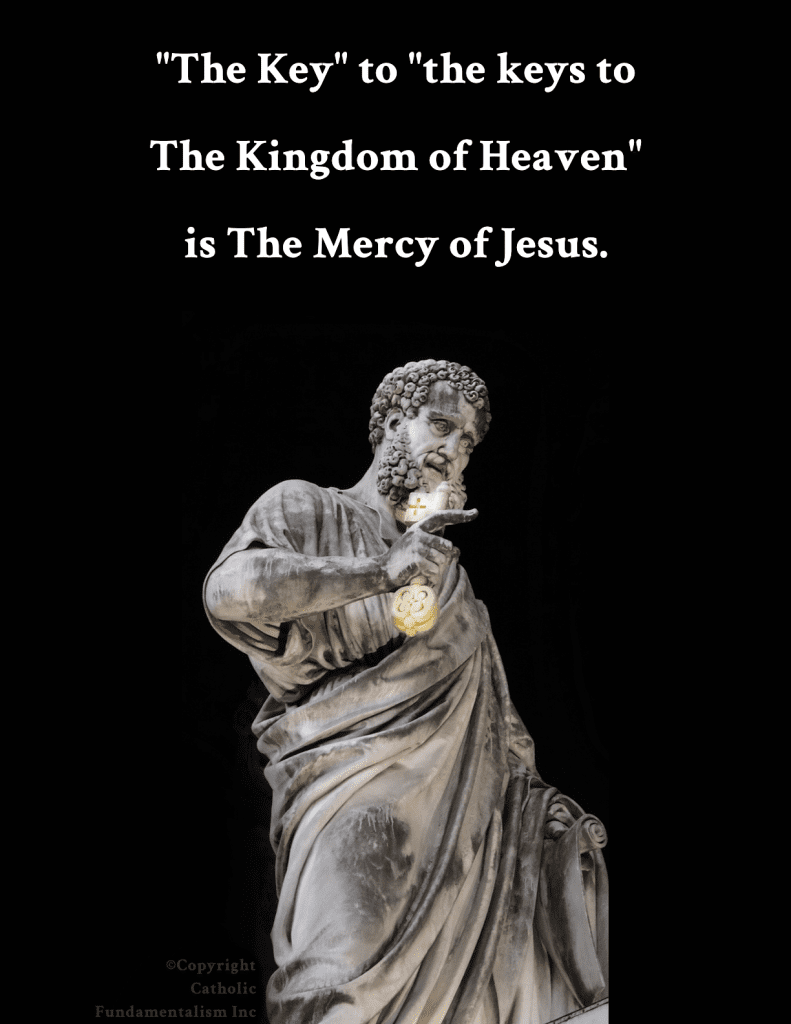
Catholics know the answer: “Those who are ‘against us’ want us to reject the specific, Church-Creating Word of Jesus Christ to His First Catholic Pope: ‘And I say unto you thou art Peter and on this rock I build My Church and the gates of hell shall not prevail against it. I give you the keys to The Kingdom of Heaven.'”
What lets Catholics stay faithful to the only Church Spoken Into Being by He Who Fulfilled God’s Prophecies to His First Catholic Pope? St. Paul tells us to follow God’s example: “He did not spare His own Son, but handed Him over for us all.”
Then St. Paul asks Question 2: “(If) God did not spare His Own Son, but handed Him over for us all, how will He not also give us everything else along with Him?”
St. Paul follows that with Question #3: “Who will bring an accusation against God’s chosen ones?” Catholics know the answer: “We are all ‘accused’ by those who reject ‘the keys to The Kingdom of Heaven’!” Paul’s answer puts things in perspective: “It is God Who acquits us.”!
Then, he asks Question #4: “Who will condemn us?”
Most Catholics find that those who condemn us are confused by demons of pride, envy, greed, gluttony, anger, lust, and sloth. Some are driven to a great jealousy that leads them to “condemn” everyone who has “the keys to The Kingdom of Heaven” that they have rejected!
St. Paul answers those who disrespect God and His Prophets’ Words: “It is Christ Jesus Who died, rather, was raised, Who also is at the right hand of God, Who indeed intercedes for us.”
Then, St. Paul asks Question #5: “What will separate us from the love of Christ?” and he answers it with Question #6: “Will anguish, or distress, or persecution, or famine, or nakedness, or peril, or the sword?”
St. Paul concludes His love of being Catholic by answering: “As it is written: ‘For your sake we are being slain all the day; we are looked upon as sheep to be slaughtered.’ (Psalm 44:23) And he continues with the blessing of Being Catholics: “No, in all these things we conquer overwhelmingly through Him Who loved us. For I am convinced that neither death, nor life, nor angels, nor principalities, nor present things, nor future things, nor powers, nor height, nor depth, nor any other creature will be able to separate us from the love of God in Christ Jesus our Lord.”
May all who respect The Bible and St. Paul be blessed to heed his words and Be Catholic!
~
Today’s Simple Rhyme: “Jesus and St. Paul know far, far more than me. / The smartest thing that I can do: embrace Catholicity.”
~